How Harris County Clay Soil Causes Foundation Leaks in Spring TX
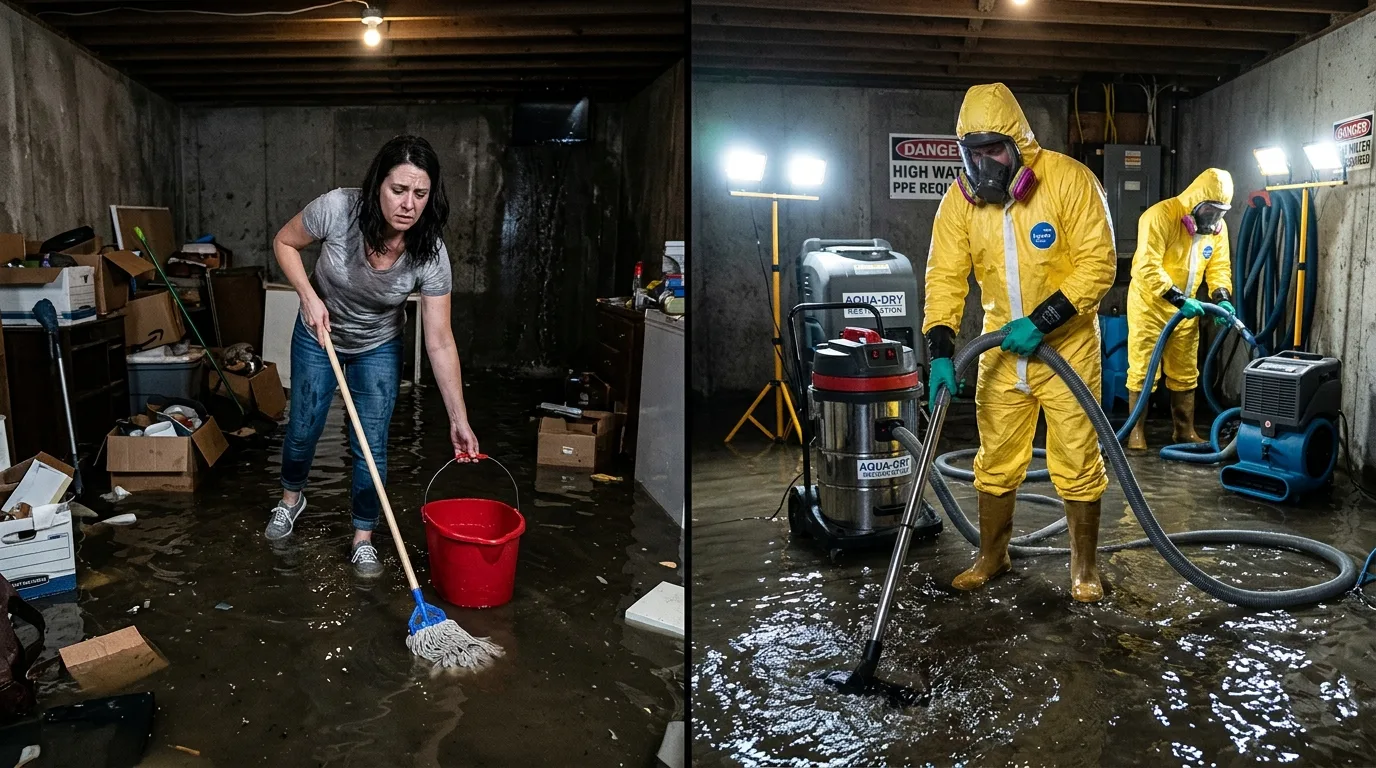
Many Spring, TX homeowners experiencing water damage are surprised to discover that the source isn’t a storm or a pipe failure — it’s the ground beneath their home. Harris County’s expansive Beaumont clay formation has been shifting, swelling, and settling under Spring’s foundations for decades, creating a slow-motion structural stress that eventually produces water damage from below.
In this post, we explain how the clay soil cycle works, what it does to foundations and pipes in Spring, the warning signs of clay-related water intrusion specific to Harris County neighborhoods, and what restoration and mitigation options homeowners have.
Slab Leak or Foundation Moisture in Spring TX?
We assess and remediate water damage from slab leaks and foundation intrusion. Call (877) 698-1311 for a free assessment.
What Makes Harris County Clay Soil Different
The Beaumont clay formation dominates the geology beneath most of Harris County, including Spring. Beaumont clay is classified as expansive clay — meaning it has a dramatically different volume depending on its moisture content. When the clay absorbs water, it swells. When it dries, it shrinks. The difference in volume between fully saturated and fully dry Beaumont clay can be substantial enough to move the structures built on top of it.
This isn’t a minor technical detail. In practice, Beaumont clay beneath a Spring home exerts upward pressure (heave) when saturated during Spring’s wet seasons and creates voids when it dries during summer and drought periods. The cumulative effect over 20–30 years of this cycle is measurable foundation settlement, cracked slabs, fractured pipe penetrations, and compromised foundation wall integrity — all of which create pathways for water to enter the home.
Unlike sandy or loamy soils that drain quickly and compress relatively predictably, Beaumont clay holds water for extended periods after rainfall. A major storm event in Spring can saturate the clay around a foundation such that soil moisture remains elevated for 4–6 weeks after the rain stops — a persistent moisture source operating independently of any above-grade flooding.
How Clay Soil Creates Water Damage in Spring TX Homes
The clay soil cycle affects Spring homes through three primary mechanisms:
Slab leaks from pipe stress: Pipes embedded in concrete slabs — water supply lines, drain lines, and gas lines — run through or under the slab and are bonded to it. When the clay beneath the slab shifts with moisture cycling, the pipes move with the slab. Over years, this cyclical stress creates micro-fractures in copper and cast-iron pipes that widen into leak points. Homes in Gleannloch Farms and Champion Forest, where trees and landscaping create significant seasonal soil moisture variation, experience accelerated pipe stress cycles and correspondingly higher rates of slab leak discovery.
Foundation cracks and water intrusion: The heave-and-settle cycle creates tensile stress in concrete foundations. Over time, this stress exceeds the concrete’s tensile strength and produces cracks — most commonly at corners, stress points, and locations where soil moisture variation is greatest (near downspouts, irrigation systems, or large tree roots). These cracks create direct pathways for surface water and soil moisture to enter the home during rain events and for weeks afterward as saturated clay drains slowly.
Persistent below-grade moisture: Saturated Beaumont clay holds water against foundation walls and beneath slabs for extended periods. This isn’t flooding — it’s slow, persistent moisture transfer that produces dampness in crawl spaces, lower wall cavities, and subfloor materials without any visible standing water. Homeowners in Sterling Lakes and Benders Landing who notice musty odors or soft spots in flooring months after a major storm event are often experiencing this delayed clay drainage effect.
Wet Floors, Musty Odor, or Soft Spots in Spring TX?
These are signs of below-grade moisture from clay soil intrusion. We identify and remediate the source. Call (877) 698-1311.
Warning Signs Specific to Harris County Clay Soil Issues
Unlike storm flooding, clay soil-related water damage often develops slowly and shows subtle early signs:
- Cracks in interior walls that follow diagonal paths at corners — this is the stress pattern of foundation movement, not settling caused by simple age
- Doors and windows that stick or no longer close properly — a sign that the frame has moved with the foundation
- Gaps between walls and floors or ceilings — expansion/contraction movement pulling connections apart
- Soft or springy areas in wood flooring — indicating moisture absorption from below, often from soil intrusion through subfloor gaps
- Unexplained increase in water bills without a visible leak — a common first sign of a slab leak before moisture reaches the surface
- Warm spots on a concrete slab floor — a hot water slab leak presents as a warm area in the slab because the warm water warms the concrete above it
- Musty odor concentrated at floor level — persistent below-grade moisture produces characteristic musty smell before visible mold growth
What Restoration and Mitigation Look Like
Clay soil-related water damage restoration in Spring requires a different approach than storm or pipe burst restoration because the moisture source is ongoing — not a one-time event. Simply extracting visible water and setting drying equipment addresses the symptom but not the cause, and the moisture will return.
Comprehensive restoration for clay soil-related water intrusion includes:
Leak detection for slab leaks: Acoustic leak detection and pressure testing identify the specific pipe failure point beneath the slab without requiring exploratory demolition. Once the location is identified, repair options include spot repair (cutting through the slab to access the failed section) or rerouting (running new supply or drain lines through the walls instead of through the slab, bypassing the stressed below-slab pipes entirely).
Foundation crack sealing: Injecting polyurethane or epoxy into foundation cracks seals the water intrusion pathway. This is a repair to the crack, not a cure for the clay soil cycle — the crack is sealed, but the foundation will continue to move slightly with clay moisture variation. Proper sealing uses flexible materials that accommodate minor movement rather than rigid epoxy that can re-crack.
Structural drying and moisture remediation: After the moisture source is addressed, the affected structural materials — subfloor, lower wall cavities, insulation — must be dried to IICRC standards. This takes longer for clay soil intrusion events than for pipe burst events because the moisture source was slow and persistent, meaning saturation often extends further into structural materials than is initially visible.
Drainage improvement: For properties where the foundation grading or downspout discharge is contributing to clay saturation, correcting these drainage issues reduces the frequency of future clay-movement events.
Frequently Asked Questions
How do I know if I have a slab leak in my Spring TX home?
The most reliable early indicators are an unexplained increase in your water bill (supply line leak), warm spots on a concrete slab floor (hot water supply line leak), or the sound of running water when all fixtures are off. More advanced signs include soft flooring, mold growth at floor level, and visible cracks radiating from slab penetrations. A licensed leak detection contractor can confirm a slab leak with acoustic detection without opening the slab. See our guide on 5 signs of hidden water damage in Spring for more indicators.
Is slab leak damage covered by homeowners insurance in Texas?
The damage caused by a slab leak — to floors, walls, and structural materials — is typically covered by standard Texas homeowners insurance as a sudden and accidental water event. The slab leak repair itself (opening the slab, repairing the pipe, closing the slab) may or may not be covered depending on your policy’s specific terms. Policies that cover the resulting damage but not the repair of the pipe itself are common in Texas. Document the damage thoroughly before any repair begins to support your claim.
How much does slab leak restoration cost in Spring, TX?
Slab leak restoration costs in Spring depend on the location of the leak, the extent of water damage to structural materials, and whether the repair involves spot access or full pipe rerouting. Detection and repair of the pipe itself runs $1,500–$5,000 for typical residential jobs. Water damage restoration to affected structural materials adds $2,000–$20,000 depending on how long the leak ran before discovery and how extensively the moisture spread through the slab and surrounding materials. See our full restoration cost guide for Spring for more context.
Foundation or Slab Leak Restoration in Spring TX
Spring Water Damage Restoration handles below-grade moisture remediation and slab leak restoration. Call (877) 698-1311 for a free assessment.
Related: