5 Signs of Hidden Water Damage in Spring TX Homes
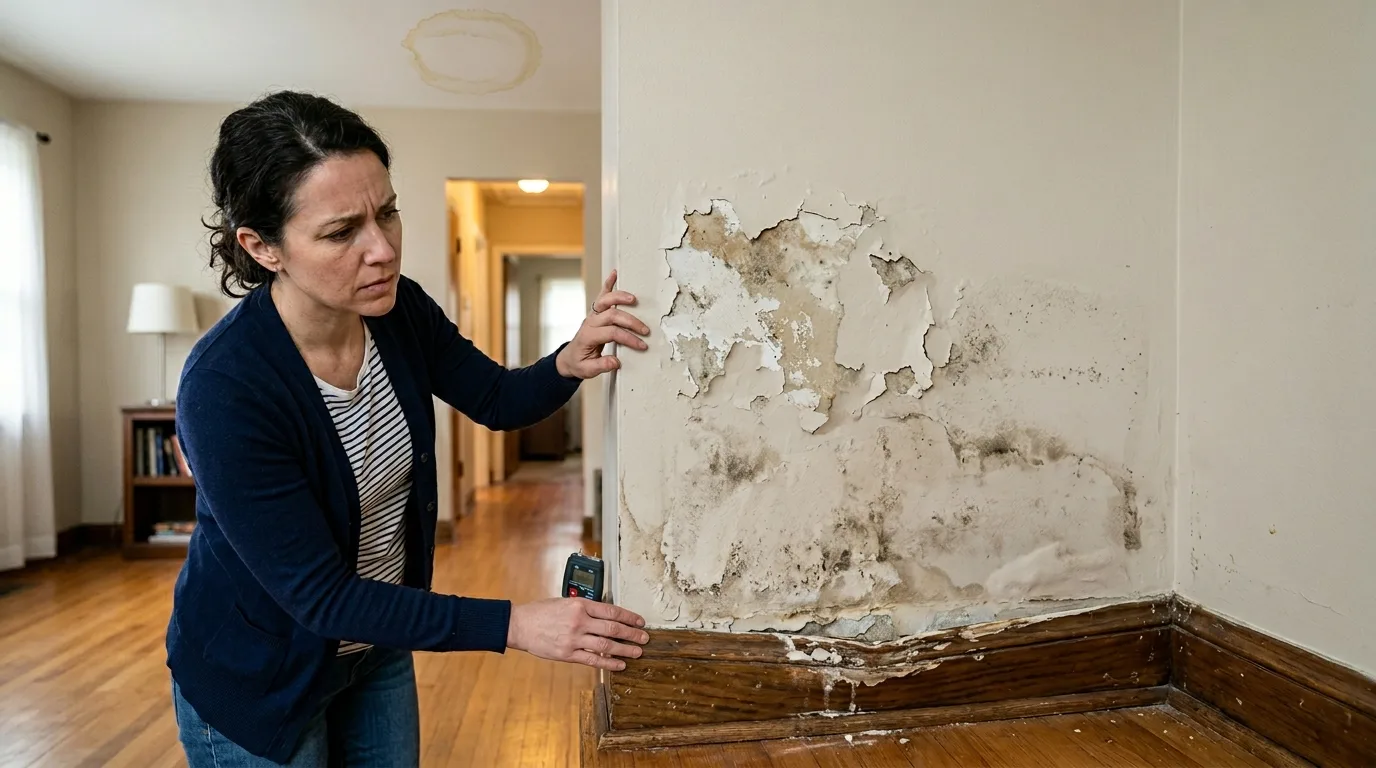
Most water damage events in Spring, TX don’t start with a visible flood. They start as a slow leak in a pipe you can’t see, a slab crack that introduces soil moisture from below, or condensation from an overtaxed HVAC system that drips into a wall cavity for weeks. By the time visible signs appear, the damage inside the walls or under the floor is often extensive — and the mold clock has been running the whole time.
In this post, we cover five specific signs of hidden water damage in Spring homes — what they look like, why they occur in this climate and soil environment, and what to do when you find them.
See Any of These Signs in Your Spring TX Home?
Get a professional moisture assessment before hidden damage becomes visible mold. Call (877) 698-1311.
Sign 1: Unexplained Increase in Your Water Bill
An increase in your monthly water bill without a corresponding increase in household water use is the earliest reliable indicator of a hidden leak. Unlike dramatic pipe bursts that announce themselves immediately, slow leaks in supply lines — particularly slab-embedded pipes in Spring’s clay-stressed homes — can release hundreds of gallons per day while leaving no visible wet area on the surface.
In Harris County specifically, the clay soil cycle that stresses slab-embedded pipes over decades produces the slow hairline fractures that cause this exact pattern: water escaping into the soil beneath the slab, no visible moisture at the surface, and a steadily rising water bill as the only indication. Homes in established Spring neighborhoods like Champion Forest and Gleannloch Farms — where original slab plumbing has been through 30-40 years of clay movement — should treat any unexplained water bill increase as a probable slab leak until proven otherwise.
What to do: Compare your current water bill to the same month in prior years. If usage has increased 20%+ without explanation, call a leak detection specialist. Acoustic leak detection can identify the approximate location of a slab leak without opening the floor.
Sign 2: Warm or Hot Spots on Your Concrete Slab
If you walk barefoot on your concrete slab floor and notice an area that feels noticeably warmer than surrounding areas, a hot water supply line is leaking beneath the slab at that location. The hot water releases heat upward through the concrete, creating a warm spot that is often distinctive enough to feel through finished flooring like tile or vinyl.
This is one of the most specific physical indicators of a slab leak. It requires no special equipment to detect — just bare feet and attention. Spring homeowners with radiant heat systems should consult with their HVAC contractor to rule out that explanation, but radiant heat is uncommon in Texas homes, making warm slab spots highly diagnostic for slab leaks in most Spring properties.
What to do: Call a plumber with slab leak detection equipment to confirm the location. Do not open the slab without leak detection confirmation — knowing the precise location prevents unnecessary demolition.
Sign 3: Soft, Springy, or Buckling Flooring
Wood, engineered hardwood, laminate, and vinyl flooring that was installed flat and firm but now has soft spots, springy sections, or visible buckling is indicating moisture absorption from below. This can come from a slab leak (moisture rising through the slab), from below-grade soil moisture intrusion through foundation cracks, or from an HVAC condensate problem in the floor cavity below.
In Spring’s humid climate, flooring moisture problems are amplified by ambient humidity — once moisture gets into a subfloor cavity, the high relative humidity of the surrounding air slows drying and allows the problem to continue much longer than it would in a drier climate. The soft spot you notice today may represent months of moisture accumulation that has already begun supporting mold growth in the subfloor materials.
What to do: Use a moisture meter to check the subfloor at the soft spot if you have access. Readings above 15% (for wood subfloor) or 1% (for concrete) indicate moisture accumulation above normal. Professional assessment is recommended — the source must be identified before repair is meaningful.
Soft Floors or Musty Odor in Your Spring TX Home?
These are signs of hidden moisture. We identify the source and remediate the damage. Call (877) 698-1311.
Sign 4: Musty Odor at Floor Level
A persistent musty or earthy odor that is most concentrated at floor level — particularly in rooms with lower humidity control or near exterior walls — is a reliable indicator of mold growth associated with hidden moisture. Mold produces volatile organic compounds (VOCs) as a metabolic byproduct, creating the characteristic smell before colonies are visible.
In Spring, TX, the combination of high ambient humidity and Harris County’s clay soil makes this sign particularly significant. Clay soil that has absorbed moisture from rain events releases that moisture slowly into adjacent foundation structures, creating a slow moisture source that supports mold growth in wall cavities and subfloor materials for weeks after a storm event has apparently resolved. Homeowners in Sterling Lakes and other Spring communities built adjacent to water features notice this pattern most frequently: a major rain event seems to have passed without interior flooding, but a musty odor develops in the weeks that follow.
What to do: A musty odor at floor level warrants professional moisture assessment, not just cleaning. The odor is a symptom of a moisture source — identify and eliminate the source or the smell will return regardless of how thoroughly you clean.
Sign 5: Discoloration or Staining on Walls and Ceilings
Yellowish, brown, or grayish staining on drywall — particularly in patterns that radiate outward from a point (indicating a dripping source) or appear as horizontal lines along a wall (indicating water wicking up from below) — indicates moisture that has either reached the surface from within the wall or is currently migrating through the drywall. Dark circular staining on ceilings is the classic indicator of a roof or plumbing leak from above.
Blistering or bubbling paint on walls is a related sign — moisture behind the paint has caused the adhesion to fail. In Spring homes with older construction, this often occurs near HVAC system locations or around windows that have failed seals. In newer developments like Harper’s Preserve, it can occur at exterior wall penetrations where sealant has failed during the shrink-swell cycle driven by clay soil movement and temperature variation.
What to do: Do not simply repaint over staining or bubbling paint — the moisture source must be identified and eliminated before any cosmetic repair. Repainting over an active moisture source produces mold growth behind the new paint within weeks.
Practical Uses: What to Do When You Find These Signs
- Water bill increase (20%+): Schedule acoustic slab leak detection before the next billing cycle
- Warm floor spot: Mark the location and call for slab leak detection immediately
- Soft or springy flooring: Test with moisture meter; arrange professional moisture assessment if readings are elevated
- Musty odor at floor level: Do not mask with air freshener — arrange professional moisture and mold assessment
- Wall or ceiling staining: Photograph the stain and call for professional assessment before painting
None of these signs are DIY-fixable without first identifying the moisture source. The most expensive outcome for Spring homeowners is discovering all five signs simultaneously in an older home — which indicates a moisture problem that has been accumulating for months or years.
Frequently Asked Questions
How do I know if my Spring TX home has hidden water damage?
The most reliable early indicators are the five described above: unexplained water bill increases, warm spots on a concrete slab, soft or springy flooring, musty odors at floor level, and wall or ceiling staining. A professional moisture assessment using thermal imaging cameras and calibrated moisture meters can detect hidden moisture in wall cavities and subfloor materials that is not yet visible — this assessment is the most reliable tool for detecting pre-symptomatic hidden damage in Spring homes.
What does hidden water damage cost to repair in Spring, TX?
Hidden water damage caught early — before structural materials are extensively saturated and before mold has established — typically costs $1,500–$4,000 for the moisture remediation component. Repairs to the source (slab leak, foundation crack, plumbing failure) are separate. Hidden damage that has been ongoing for months and has caused mold growth in wall cavities and structural materials can run $5,000–$20,000+ depending on how extensively the moisture has spread. See our full cost guide for Spring, TX.
Can I find hidden water damage myself?
You can identify potential indicators using the signs above, and a consumer moisture meter (available at hardware stores) can confirm moisture in accessible flooring and walls. However, hidden moisture in enclosed wall cavities and subfloor spaces requires professional equipment — thermal imaging cameras detect temperature anomalies caused by moisture evaporation that are invisible to the naked eye. Professional assessment is the reliable method for confirming or ruling out hidden damage.
Professional Moisture Assessment in Spring TX
Spring Water Damage Restoration uses thermal imaging and calibrated moisture meters to find hidden damage before it becomes mold. Call (877) 698-1311.
Related: