Mold After Water Damage: How Spring's Humidity Makes It Worse
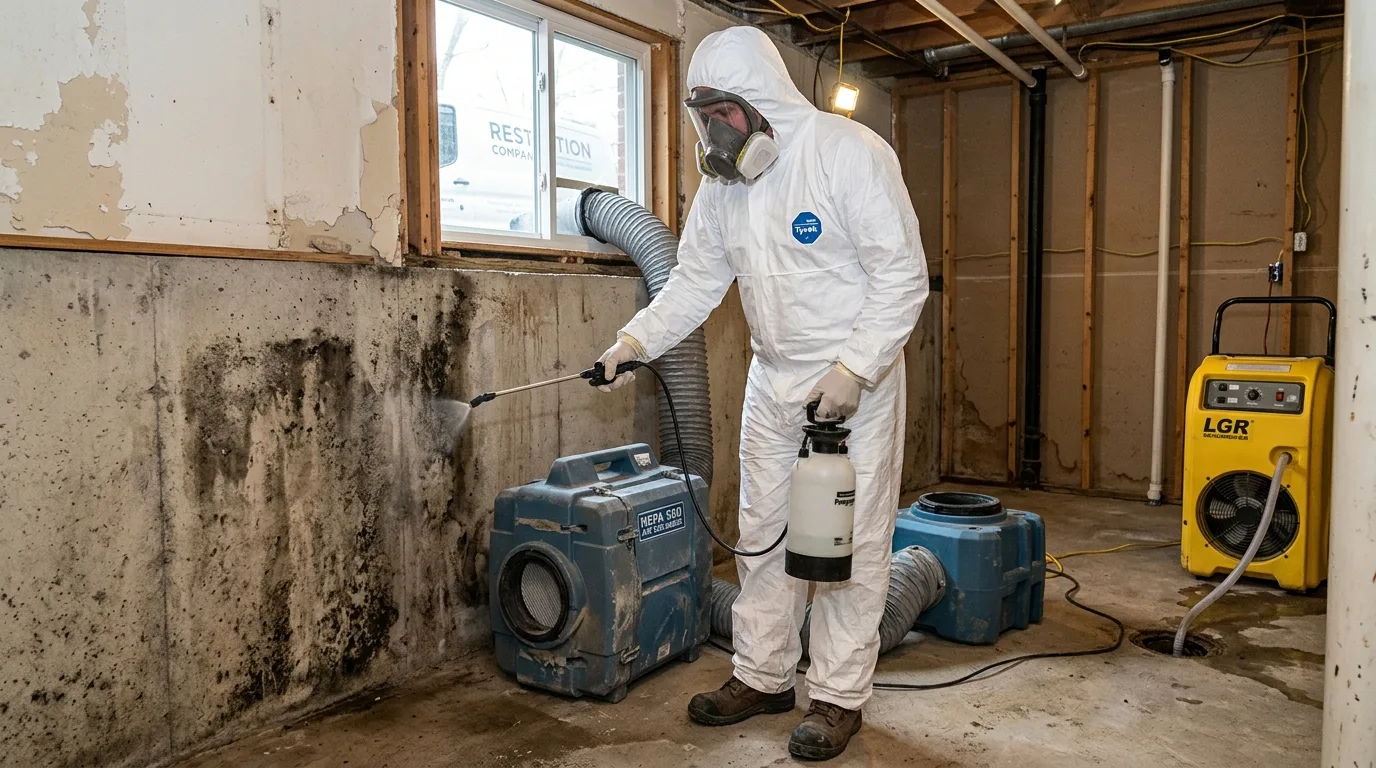
Twenty-four to forty-eight hours. That’s how long it takes for mold to begin establishing in wet materials in Spring’s humid subtropical climate — not days, not a week. Every hour after a water event that passes without professional extraction and drying increases the probability that your restoration project also becomes a mold remediation project.
In this post, we explain why Spring’s climate accelerates mold growth compared to drier regions, what the signs of mold growth after water damage look like, how to distinguish mold risk levels that can be addressed with cleaning versus those that require professional remediation, and what the remediation process involves in a climate like Spring’s.
Water Damage + Spring's Humidity = Fast Mold Risk
Call us before the 24-hour window closes. Spring Water Damage Restoration responds in 60 minutes. Call (877) 698-1311.
Why Spring TX’s Climate Is Mold’s Ideal Environment
Mold requires three things to grow: moisture, a food source (organic material), and the right temperature. In Spring, Texas, two of the three are almost always present. Average annual humidity in the Houston metropolitan area runs high throughout the year, peaking in summer months when indoor relative humidity can reach 70–80% in homes with aging or undersized HVAC systems. Temperature ranges that support mold growth (40°F–100°F) cover virtually all of Spring’s calendar year.
The missing variable — moisture — is what a water event provides. And in Spring’s climate, that moisture doesn’t dissipate quickly. Surface water that evaporates in a dry climate stays wet in Spring’s humidity because the ambient air is already carrying near-maximum moisture. This means wet materials in a Spring home during spring or summer dry out at a fraction of the rate they would in Denver or Phoenix — and mold spores need only a narrow window of surface moisture to germinate.
The practical implication is that water damage response urgency that would be reasonable in a dry climate (2–3 days) is inadequate in Spring. The 24–48 hour window before mold establishment reflects local conditions, not a generic industry figure. In the winter months when Spring’s humidity drops somewhat, that window extends slightly — but the rule of thumb remains: treat any water event as requiring immediate professional response.
What Mold Growth After Water Damage Looks Like
Mold growth after water damage follows a predictable progression in Spring homes:
Stage 1 (24–72 hours): Invisible growth. Mold spores have germinated and are beginning to establish colonies, but nothing is visible to the naked eye. The affected materials may smell musty before any visual sign appears.
Stage 2 (72 hours–2 weeks): Early visible growth. Discoloration appears on drywall, wood framing, or subflooring — typically black, green, or white spots. The musty odor becomes noticeable in the room.
Stage 3 (2+ weeks): Established colonies. Mold has spread from the initial germination sites and may now cover significant portions of affected surfaces. At this stage, mold is often present on materials that looked dry, because the growth has been occurring in areas with residual moisture below the surface.
After a water event in Spring, if you haven’t had professional drying and at least 48 hours have passed, assume that Stage 1 growth may be occurring even if nothing is visible. A professional assessment is the only way to confirm.
Worried About Mold After Water Damage in Spring TX?
We inspect for mold growth as part of our water damage assessment. Early detection prevents Stage 3 problems. Call (877) 698-1311.
Types of Mold Found After Water Damage in Spring Homes
Different mold types require different assessment and remediation approaches:
Cladosporium: Common in Spring TX homes, appears as black or green spots on surfaces. Generally allergenic rather than acutely toxic. Found frequently on window seals, air conditioning components, and water-damaged drywall.
Aspergillus: Extremely common in humid climates. Multiple species — some allergenic, some potentially more concerning. Often found in HVAC systems and on cellulose materials like drywall and cardboard that absorbed water from flooding.
Stachybotrys (black mold): The species that gets the most attention. Requires sustained and significant moisture exposure to establish. More commonly found in Spring homes that experienced Cypress Creek flooding or had slow leaks over months. Requires full professional remediation with biohazard protocols.
Penicillium: Common after water damage on water-damaged insulation, carpet, and drywall. Fast-growing under humid conditions. Produces musty odor. Professional remediation typically required for structural involvement.
The important practical point: homeowners should not attempt to identify mold species visually. Species identification requires laboratory analysis of samples. What matters for response decisions is the location (surface vs. structural), the extent (square footage affected), and the presence of water damage as a confirmed source.
When Cleaning Is Not Enough
A common mistake Spring homeowners make is attempting to clean visible mold with bleach or commercial mold cleaners. This approach addresses the visible surface but does not reach mold growing within wall cavities, in insulation, or under flooring — which is where most post-water-damage mold growth occurs.
Bleach kills mold on non-porous surfaces. It does not penetrate porous materials like drywall, wood, or insulation. Bleach applied to a drywall surface that has mold growing within its paper facing may appear to remove the discoloration, but the mold continues growing beneath the surface. When structural materials like drywall and insulation test positive for mold, they must be removed and replaced — not cleaned in place.
The decision point: if the mold growth covers less than 10 square feet on a non-structural, non-porous surface (tile, glass, solid wood), homeowners can attempt cleaning. If the growth is on porous materials (drywall, insulation, carpet), involves structural surfaces (wall framing, subfloor), or covers more than 10 square feet, professional remediation is required.
What Professional Mold Remediation Involves in Spring
Mold remediation following water damage in Spring follows Texas Mold Assessment and Remediation Rules, which require licensed assessors and remediators. The process includes HEPA-contained demolition of affected porous materials, antimicrobial treatment of structural surfaces, HEPA air scrubbing to capture airborne spores, and post-remediation clearance testing to verify the work succeeded. The full process is described in our mold remediation service page.
The humidity-specific requirement in Spring is extended air scrubbing time. Because ambient humidity is higher, spore settling takes longer, and HEPA air scrubbers must run longer to achieve the same post-remediation air quality that a drier climate would achieve in less time.
Frequently Asked Questions
How fast does mold grow after water damage in Spring, TX?
Mold can begin germinating in wet materials within 24–48 hours in Spring’s humid subtropical climate. This is the baseline for our climate — not a worst-case scenario. In the hottest and most humid months (June–August), growth can begin at the lower end of that range. Professional extraction and drying within the first few hours after water damage is the most effective mold prevention available in Spring’s climate conditions.
What does mold remediation cost after water damage in Spring, TX?
Mold remediation in Spring ranges from $500–$1,500 for small isolated areas to $3,000–$8,000+ for whole-home remediation. The cost is driven primarily by how much structural material must be removed and whether the event created mold in multiple rooms. Early response to water damage typically prevents the kind of extensive structural mold growth that drives costs to the higher end of the range. See our mold remediation service page for full cost detail.
Can I prevent mold after water damage in Spring TX?
Yes — the most effective prevention is professional water extraction and structural drying within the first few hours after a water event. Industrial air movers and dehumidifiers extract structural moisture at a rate that consumer equipment cannot match, keeping materials below the moisture threshold that supports mold growth. If you’ve had a water event and more than 24 hours have passed without professional response in Spring’s climate, mold assessment should be part of your initial restoration scope — not an afterthought.
Mold Risk After Water Damage in Spring TX
Spring Water Damage Restoration handles both water mitigation and mold remediation. One call, one team. Call (877) 698-1311.
Related: