How to File a Water Damage Insurance Claim in Spring, TX
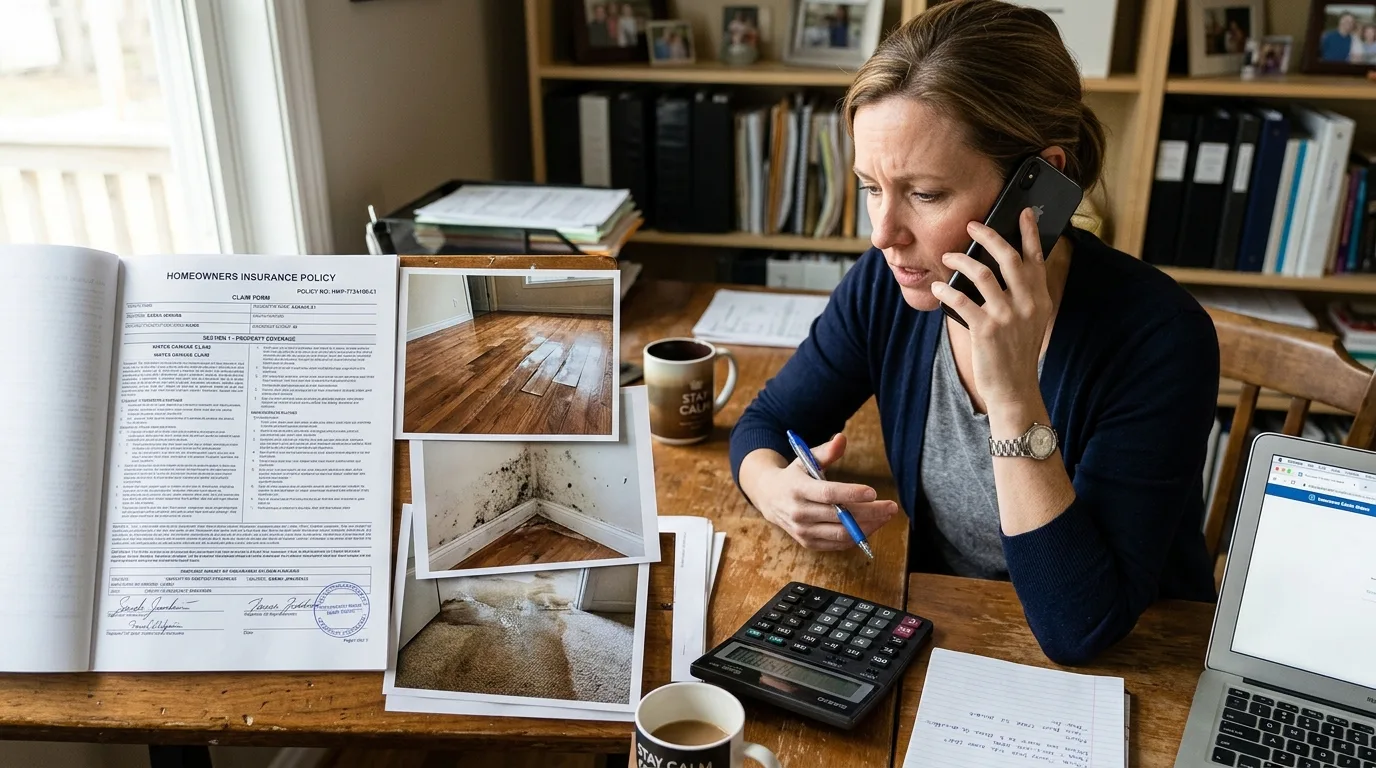
Filing a water damage insurance claim in Spring, TX is not complicated — but homeowners who skip key documentation steps often receive settlements that are 30–50% below their actual damage scope. The insurance carrier’s interest is in accurate, documented claims. An underdocumented claim creates legitimate grounds for partial payment. An overdocumented claim with complete evidence of every damaged item closes faster and at the correct amount.
In this post, we walk through the complete claim process specific to Texas homeowners, the documentation you must collect before cleanup begins, how Spring’s specific risks (flooding, slab leaks, clay soil intrusion) affect coverage, and the most common reasons Texas water damage claims are reduced or denied.
Water Damage Claim Help in Spring TX
We work directly with all major insurance carriers and generate claim-quality documentation from the first hour on-site. Call (877) 698-1311.
Before You Do Anything: Document the Damage
Documentation is the foundation of a successful water damage claim. The adjuster who reviews your claim was not present when the damage occurred — the only way they can understand what happened is through the documentation you and your restoration contractor provide.
What to document before any cleanup:
- Photograph every affected room from multiple angles, including wide shots showing the full extent of water
- Close-up photos of the point of failure (burst pipe, failed appliance, storm intrusion point)
- Video walkthroughs narrating what you see and when you discovered it
- All damaged personal property — furniture, electronics, clothing, documents — photographed in place before moving
- Timestamps matter: your phone’s photo timestamps establish the discovery timeline
What to save:
- All bills, estimates, and invoices related to the event
- Written communications with your carrier, including names of everyone you speak with and dates
- All receipts for temporary accommodations or emergency purchases (hotel, clothes, food) if you were displaced
Do not start any cleanup before documenting — and do not start major cleanup before your adjuster has had the opportunity to inspect. Check with your carrier about their inspection timeline; most will tell you it’s acceptable to begin emergency mitigation (extraction and drying) immediately, which is correct and important, but major demolition should wait for adjuster sign-off when possible.
How Texas Water Damage Coverage Works
Standard homeowners insurance in Texas covers sudden and accidental water damage — events where water entered the home as a result of a covered peril, suddenly, without warning. Common covered causes include:
- Pipe bursts (sudden failure — not a known slow leak)
- Appliance failures (sudden overflow or leak)
- Storm-driven water intrusion through a breached roof or broken window
- HVAC condensate overflow (usually covered as an accidental event)
What standard Texas homeowners insurance does NOT cover:
- Flooding from rising surface water, including Cypress Creek overflow — this requires separate flood insurance through the National Flood Insurance Program (NFIP) or a private flood carrier
- Damage from a slow leak the homeowner was aware of and did not repair (known and ongoing damage)
- Sewer backup — unless a specific sewer backup rider was purchased
- Mold resulting from a problem that existed before the current event
The coverage distinction that matters most in Spring is the storm flooding exception. If your home flooded because Cypress Creek overflowed its banks or because storm surge pushed water in from outside, that is flood damage — not homeowners insurance damage. For the Harris County homeowners who lost coverage assumptions after Harvey revealed this distinction, the lesson was expensive. Review your policy specifically for what constitutes “covered water damage” versus “flood.”
Need Documentation Help for Your Spring TX Water Claim?
We generate complete insurance documentation throughout the restoration process. Call (877) 698-1311 to get started.
The Claim Filing Process
Step 1: Notify your carrier immediately. Call or file online as soon as you have documented the initial damage. Most Texas policies require “prompt notice” — waiting days to report can be used to reduce or deny your claim.
Step 2: Request your policy’s coverages explicitly. Ask your carrier about:
- Dwelling coverage limits for structural repair
- Personal property coverage limits
- Additional living expenses if you need to relocate during restoration
- Guaranteed replacement cost vs. actual cash value (replacement cost policies pay more for damaged items)
Step 3: Begin emergency mitigation. You are both permitted and required by your policy to begin emergency mitigation — water extraction and structural drying — immediately to prevent additional damage. Failing to mitigate promptly can result in your carrier denying the portion of damage that could have been prevented. This is why calling a restoration team at the same time you call your carrier is the correct procedure.
Step 4: Cooperate with the adjuster inspection. The adjuster will inspect the damage and generate a scope of work. Your restoration contractor’s scope of work should be provided to the adjuster alongside their inspection — the two documents should be compared for completeness. Adjusters sometimes miss items that aren’t explicitly called out; your contractor’s documentation is your backup.
Step 5: Review the settlement before signing. The initial settlement offer is not necessarily the final word. If the adjuster’s scope misses items your contractor identified, you can supplement the claim with additional documentation. A public adjuster (a private professional who represents policyholders, not the carrier) can assist with disputed claims, typically for a percentage of the additional recovery.
Texas-Specific Rules and Timelines
Texas law establishes specific timelines that carriers must follow for homeowner claims:
- 15 days to acknowledge receipt of your claim after filing
- 15 business days to accept or reject the claim after receiving all requested documentation (with possible 45-day extension if the carrier provides written explanation)
- 5 business days to pay after accepting a claim
If your carrier is not meeting these timelines, contact the Texas Department of Insurance at tdi.texas.gov or call their consumer helpline. The TDI has enforcement authority over carrier compliance with these deadlines.
Common Reasons Texas Water Damage Claims Are Reduced or Denied
Pre-existing damage: Adjusters look for evidence that the damage existed before the claimed event. Deferred maintenance, slow leaks, and gradual deterioration are excluded from coverage. Homeowners who maintain their property and address problems promptly are less vulnerable to this denial reason.
Failure to mitigate: If you allowed damage to worsen by not beginning mitigation promptly, the carrier can reduce the claim by the amount of damage that mitigation would have prevented. This is why immediate response to water events — including calling a restoration team before calling the adjuster — is both correct and in your financial interest.
Flooding vs. sudden water damage: As discussed above, surface water flooding is not covered under standard homeowners policies. If an adjuster can establish that water entered from outside rather than from a covered internal source, the claim may be denied or significantly reduced.
Insufficient documentation: Claims without adequate documentation of the damage, its cause, and its extent are genuinely harder to settle at full value. This isn’t carrier bad faith — it’s a documentation problem that homeowners can solve by following the documentation steps above.
Frequently Asked Questions
Does flood insurance cover water damage from pipe bursts in Spring, TX?
No. Flood insurance specifically covers flooding from rising surface water — the overflow of bodies of water, storm surge, and similar external water sources. Pipe bursts, appliance failures, and internal water events are covered by standard homeowners insurance, not flood insurance. The two coverages are designed to complement each other: homeowners covers internal water events, flood covers external flooding.
How long does a water damage insurance claim take to settle in Texas?
Texas law requires carriers to accept or reject claims within 15 business days of receiving complete documentation. Most straightforward residential water damage claims settle within 30–45 days of the initial report. Complex claims with disputed scope, large-loss events, or supplemental claims for additional damage can take 90 days or more. Working with a restoration contractor who generates complete insurance documentation accelerates the process.
Can I choose my own water damage restoration contractor in Texas?
Yes. Texas law gives homeowners the right to choose their own contractor for covered insurance repairs. Your carrier cannot require you to use a contractor from their “preferred” vendor list. If an adjuster pressures you to use a specific contractor, understand that you have the legal right to choose your own. We work directly with all major insurance carriers operating in Texas and generate documentation that meets their requirements regardless of which carrier your policy is with.
Insurance Claim Support for Spring TX Water Damage
Spring Water Damage Restoration generates complete claim documentation and works directly with all major carriers. Call (877) 698-1311.
Related: