Slab Leak Repair vs Water Damage Restoration in Spring TX
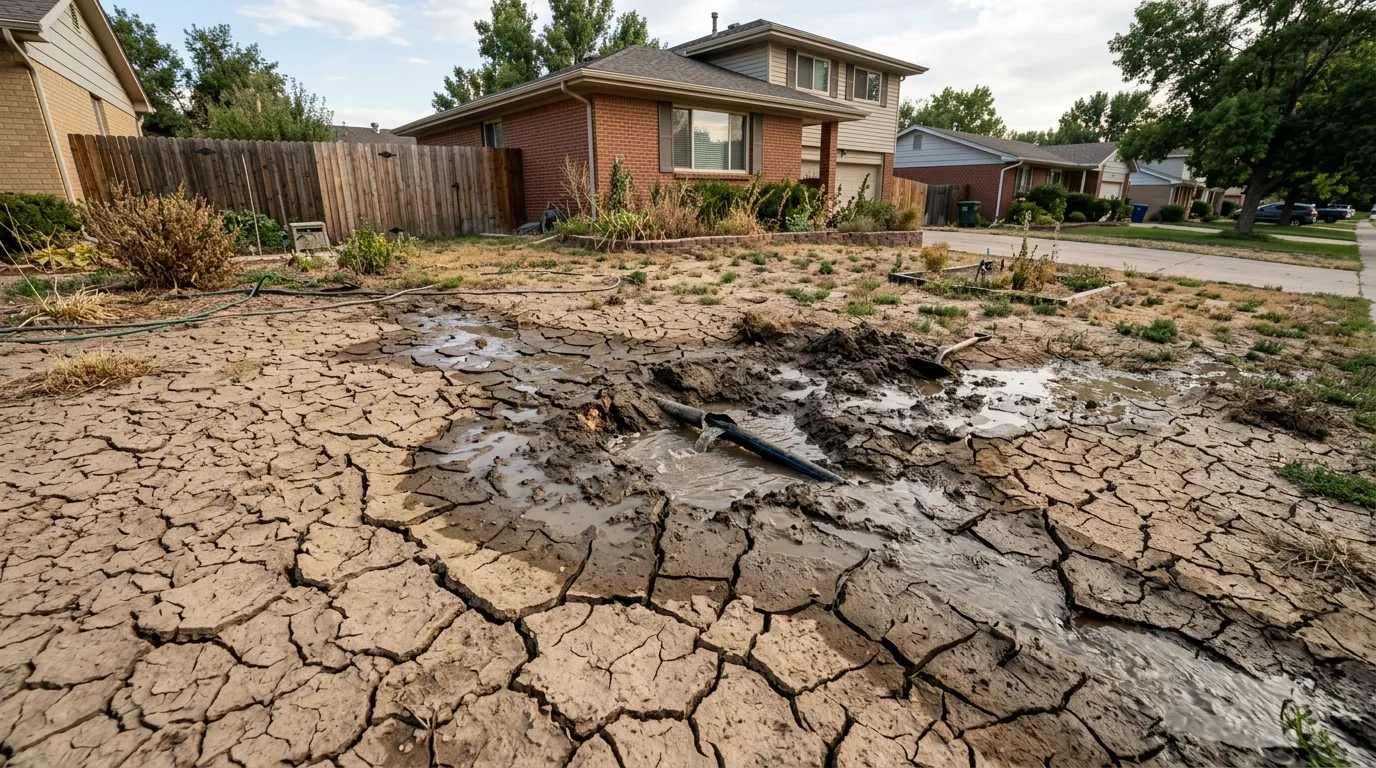
When a Spring homeowner discovers a slab leak, the first call is usually to a plumber. That’s correct — the leak itself must be repaired. But the water that has already escaped from the pipe and saturated the slab, subfloor, and adjacent wall materials requires a completely different scope of work from a completely different type of contractor. Confusing these two scopes — or assuming the plumber handles both — is one of the most common and most expensive mistakes Spring homeowners make after a slab leak discovery.
In this post, we explain what each scope covers, why Harris County clay soil makes slab leaks particularly common in Spring, how to determine which repair approach the plumber should use, and what the restoration contractor’s role is in the process.
Slab Leak Restoration in Spring TX
We handle the water damage restoration after your slab leak is repaired. One call, comprehensive assessment. Call (877) 698-1311.
What Slab Leak Repair Covers (Plumber’s Scope)
Slab leak repair is the plumber’s job: finding the exact location of the failed pipe, accessing it, repairing or rerouting it, and returning the plumbing system to functioning condition. Nothing about slab leak repair addresses the water that escaped from the pipe before the leak was discovered.
There are three main approaches plumbers use for slab leak repair in Spring, TX:
Spot repair (open-slab access): The plumber breaks through the concrete slab at the location of the leak, repairs or replaces the specific failed section of pipe, and patches the concrete. This is the most straightforward repair when the leak is localized and the pipe is otherwise in good condition. However, in older Spring homes where Harris County clay soil movement has stressed the entire pipe run, repairing one section often results in a subsequent failure elsewhere along the same pipe.
Pipe rerouting (above-slab bypass): Rather than accessing the pipe through the slab, the plumber installs new supply or drain lines through the walls of the home, bypassing the slab-embedded pipes entirely. This approach is more disruptive to finishes (walls must be opened for new pipe runs) but eliminates the risk of future failures in the same below-slab pipes. For older Spring homes in Champion Forest or Gleannloch Farms where multiple slab sections show stress, rerouting is often the more cost-effective long-term solution.
Pipe lining (epoxy lining): For drain lines, epoxy lining can seal cracks from within the pipe without opening the slab. This is not applicable to supply lines (which operate under pressure) but is sometimes used for drain line failures in Spring homes.
What Water Damage Restoration Covers (Restoration Contractor’s Scope)
After the plumber stops the leak, the restoration contractor’s work begins. A slab leak that ran for any significant time before discovery has introduced water into:
- The concrete slab itself (concrete absorbs water from below and holds moisture)
- The subfloor materials (wood subflooring is particularly susceptible to moisture absorption)
- The finished flooring (tile grout lines, wood and laminate flooring absorb water through subfloor)
- Lower portions of adjacent walls (drywall wicks water upward from saturated subfloor)
- Insulation in affected wall cavities (absorbs water and holds it against structural surfaces)
None of this moisture goes away on its own in Spring’s humid climate. The ambient humidity that characterizes Spring’s subtropical environment slows evaporative drying of structural materials to the point where they remain at elevated moisture levels for weeks or months without active drying equipment. This sustained elevated moisture is exactly the condition that supports mold growth — and in Spring’s climate, mold can begin establishing within 24–48 hours of water exposure.
The restoration contractor’s scope includes moisture mapping (using thermal imaging and calibrated moisture meters to identify all affected areas), extraction of any standing water, placement of industrial air movers and dehumidifiers, daily moisture monitoring, controlled demolition of materials that cannot be dried in place, antimicrobial treatment, and post-drying verification. Only after all structural materials have returned to target moisture levels can reconstruction begin.
Water Damage After Your Slab Leak — Call Us Now
The plumber fixes the pipe. We fix the water damage it caused. Spring Water Damage Restoration, IICRC certified. Call (877) 698-1311.
Why Harris County Clay Soil Makes Slab Leaks Common in Spring
Spring sits on the Beaumont clay formation — an expansive clay that swells with moisture and shrinks in drought. This clay movement creates foundation heave and settlement cycles that stress slab-embedded pipes continuously over the life of the structure. The stress is cumulative: each wet-dry cycle creates small amounts of pipe movement and micro-fracturing, and over 20–30 years the accumulated damage produces hairline cracks that develop into full leak points.
The clay soil factor means that slab leaks are significantly more common in Spring and throughout Harris County than in cities built on different soil types. Homes in Gleannloch Farms and Champion Forest — where older infrastructure meets the full Beaumont clay exposure — see the highest rates of slab leak discovery. Seasonal landscaping changes that affect soil moisture near the foundation (like large trees removed or added) can accelerate the timeline by creating sudden changes in the moisture variation the clay experiences.
The restoration implication: because clay soil holds moisture against the foundation for weeks after a rainfall event, a slab leak in a Spring home may be receiving moisture from two sources simultaneously — the leaking pipe from within, and saturated clay soil from outside. Restoration scoping must account for both sources to ensure complete drying.
Determining the Right Repair Approach for Your Spring Home
The choice between spot repair, rerouting, and lining depends on several factors that your plumber can assess:
Pipe material and age: Copper pipes in homes built before 1995 are reaching or past their expected service life in Spring’s environment. If the pipe is copper and the home is 30+ years old, the argument for full rerouting is strong — you’re repairing a pipe that may fail again at a different location within a few years.
Number of previous slab leaks: If your Spring home has had more than one slab leak, the remaining below-slab pipes are demonstrably under stress. Rerouting the entire system eliminates recurring slab repairs that collectively cost more than a single full reroute.
Foundation condition: If your Harris County home already shows significant foundation movement from clay soil cycling — visible cracks, settling, evidence of previous repair — the ongoing foundation stress increases the probability of future pipe failures in below-slab lines.
Location of the leak: A leak near an accessible foundation edge is easier to spot-repair with less concrete demolition. A leak in the center of a large slab under a kitchen or great room makes spot repair more disruptive and expensive, making rerouting relatively more attractive.
Frequently Asked Questions
How long does slab leak restoration take in Spring, TX?
Slab leak water damage restoration in Spring typically takes 5–10 days from initial moisture mapping through completed structural drying, depending on how long the leak ran and how extensively moisture penetrated structural materials. The drying phase cannot be shortened by adding more equipment — moisture must move out of structural materials at the rate the materials allow, which depends on the extent of saturation. Post-dry reconstruction (replacing demolished materials) adds additional timeline depending on scope.
Does insurance cover slab leak water damage in Spring, TX?
The water damage caused by a slab leak — to floors, walls, and structural materials — is typically covered by standard Texas homeowners insurance as a sudden and accidental water event. The slab repair itself (opening the concrete, repairing the pipe) may or may not be covered depending on your specific policy terms. Most Texas policies cover resulting damage but not the cost of accessing the leak. The critical documentation requirement is establishing the date of discovery versus the date the leak began — policies require sudden events, not discovered gradual damage. See our insurance claim guide for Spring TX for full coverage discussion.
How much does slab leak restoration cost in Spring, TX?
Total slab leak project costs in Spring include the plumber’s repair ($1,500–$5,000 for most residential repairs) plus water damage restoration ($2,000–$20,000 depending on extent). The restoration cost range reflects the wide variation in how long leaks run before discovery — a leak discovered the same day may require only subfloor drying, while a leak running for a week may require demolition and replacement of flooring, subfloor, and lower wall materials. See our full cost guide for Spring, TX water damage.
Slab Leak Water Damage Restoration in Spring TX
Spring Water Damage Restoration handles all water damage from slab leaks — extraction, drying, demolition, and reconstruction. Call (877) 698-1311.
Related: