The Complete Guide to Water Damage Categories (1, 2, 3) in Spring TX
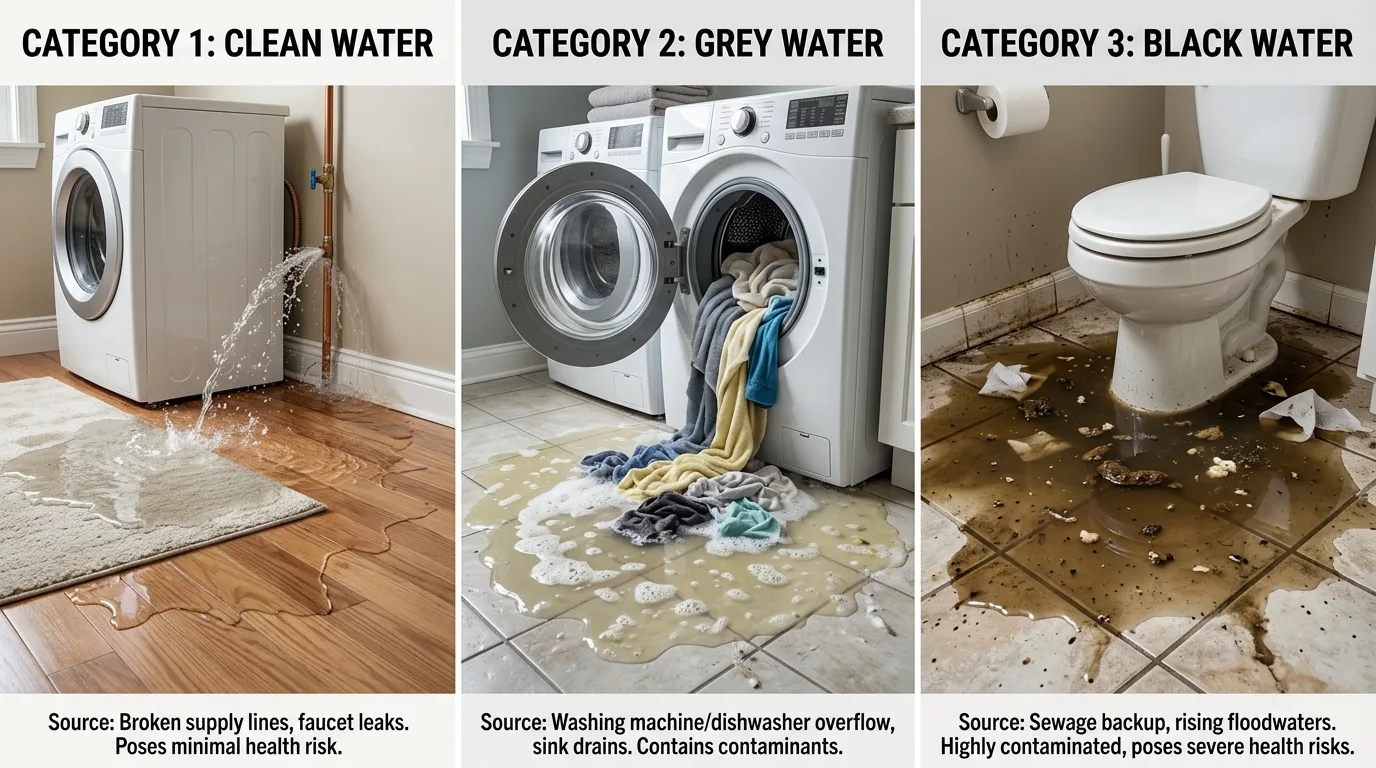
When you call a water damage restoration team in Spring, TX, one of the first questions you’ll hear is: “What’s the water source?” The answer to that question determines which cleanup protocol applies, which materials must be removed, what the health risks are, and ultimately what your restoration will cost. The IICRC — the international standard body for water damage restoration — classifies water damage into three categories that all professional restorers use. Understanding what each category means for your specific situation helps you know what to expect.
In this post, we explain what each water damage category means in plain language, give Spring TX-specific examples of each, explain how categories can change over time, and describe what the cleanup process looks like for each category.
Water Damage in Spring TX — Expert Assessment
Category matters for cleanup protocol and cost. Let us assess your event accurately from the start. Call (877) 698-1311.
What Water Damage Categories Are
The IICRC S500 Standard defines three water categories based on the contamination level of the water involved. Categories determine which materials can be dried in place, which must be removed, what personal protective equipment technicians must use, and what post-remediation verification is required. These aren’t informal guidelines — they are the professional standard that all certified water damage restoration contractors follow, including in Spring and throughout Harris County.
Category 1: Clean Water
Category 1 water originates from a sanitary source and poses no substantial health risk at the time of loss. Examples in Spring TX homes include:
- Broken supply line from a water main or fixture (toilet tank, not bowl)
- Overflowing bathtub or sink that had been used with clean water
- Rainwater entering through a roof breach (generally Category 1 when first entering, before contact with other materials)
- Appliance water supply line failure (icemaker, dishwasher feed)
Cleanup approach for Category 1: Porous materials like carpet and drywall can often be dried in place if extraction and drying begin promptly — typically within the first few hours. The goal is to return all structural materials to pre-loss moisture levels before mold has an opportunity to establish. In Spring’s humid subtropical climate, the time window for in-place drying is shorter than in drier regions — the 24-hour rule is a genuine constraint, not a conservative guideline.
Cost range for Spring TX: Category 1 events in Spring average $2,018–$2,073 based on 105 local projects analyzed, with a range of $1,990–$2,101 and roughly $10–$11 per square foot.
Category 2: Grey Water
Category 2 water contains significant contamination — physical, biological, or chemical — that can cause discomfort or illness if contacted. Examples in Spring TX homes include:
- Appliance discharge water (washing machine overflow, toilet bowl overflow without fecal matter)
- Water from a sump pump failure
- Rainwater and stormwater that has been in contact with soil or exterior surfaces
- Drainage from a broken drain line that contained no sewage
- Aquarium water
Flood water from storm events that has been in contact with soil is typically classified as Category 2 at minimum upon entry — the contact with exterior soil introduces biological contamination even if the original water source was rain.
Cleanup approach for Category 2: Porous materials that came into contact with Category 2 water may need to be removed rather than dried in place, depending on the IICRC protocol for the specific material and conditions. Antimicrobial treatment of all affected structural surfaces is required. Personal protective equipment is required for technicians. Water mitigation documentation must reflect Category 2 classification for insurance purposes.
Cost range: Category 2 events typically run $3,000–$6,000 for standard residential events in Harris County, though the wide variation in source, affected area, and materials makes this a rough range.
Not Sure What Category Your Water Damage Is?
We assess water category from the first hour on-site and explain what it means for your cleanup. Call (877) 698-1311.
Category 3: Black Water
Category 3 water is grossly contaminated and can contain pathogens, toxigenic agents, and other harmful substances that could cause severe illness. Examples in Spring TX homes include:
- Sewage backup or toilet overflow with fecal matter
- Flooding from Cypress Creek or Spring Creek overflow (floodwater that has contacted sewage infrastructure)
- Water that originated as Category 1 or 2 but has been allowed to sit for 48+ hours in a warm, humid environment
- Seawater or ground surface water flooding from storm surge
The third point in this list is critically important for Spring homeowners: any water left standing for more than 48 hours in Spring’s climate automatically degrades to Category 3 classification regardless of its original source. The hot, humid conditions promote bacterial growth that elevates contamination levels to the Category 3 threshold. A clean-water pipe burst that ran over a weekend before being discovered is a Category 3 event by the time the homeowner returns.
Cleanup approach for Category 3: Complete removal of all porous materials that contacted Category 3 water is mandatory — not optional. This means carpet, padding, drywall to at least 12 inches above the waterline, insulation, and any organic materials that absorbed contaminated water. Non-porous structural surfaces must be cleaned, then treated with EPA-registered antimicrobial and disinfectant agents. Full biohazard personal protective equipment is required for all technicians throughout the process. Post-remediation testing verifies that contamination levels have been reduced to acceptable levels before reconstruction. The Category 3 water removal process generates significant waste that must be properly disposed of under biohazard protocols.
Cost range: Category 3 events typically run $4,000–$15,000+ for residential events depending on affected area, depth of material involvement, and whether mold remediation is also required.
How Categories Change Over Time
Water category can only go in one direction over time — from lower to higher. Category 1 can become Category 2 or 3. Category 2 can become Category 3. No category can improve.
The primary mechanism is time and temperature. Bacterial growth accelerates as water sits in a warm environment — and Spring’s climate is warm most of the year. The 48-hour Category 3 reclassification rule reflects the bacterial growth rate at typical indoor temperatures. During Spring’s hot summer months, some restoration professionals apply a more aggressive timeline — 24 hours may be sufficient for Category 3 reclassification when temperatures exceed 90°F.
The practical implication: the category you call a restoration team with depends on when you call. A pipe burst discovered immediately is a Category 1 event. A pipe burst discovered after a long weekend is likely a Category 3 event regardless of the pipe’s source. Response time directly affects both the cleanup protocol required and the total cost.
Practical Uses: What Category Means for Your Restoration
- Category 1 caught immediately: Drying in place likely viable; lowest cost; fastest timeline; no biohazard protocols
- Category 2 (stormwater, appliance discharge): Antimicrobial treatment required; some material removal likely; moderate cost; 5–10 day timeline typical
- Category 3 (sewage, Cypress Creek flood, 48+ hour standing water): Full material removal required; biohazard protocols throughout; highest cost; 7–14+ day timeline
- Category reclassification: Any event that sat 48+ hours should be assessed as Category 3 even if it started as Category 1
Frequently Asked Questions
What category is floodwater from Cypress Creek in Spring TX?
Floodwater from Cypress Creek — or any natural body of water that overflows during a storm event — is Category 3. Natural surface water carries bacterial contamination from soil, animal waste, and storm drain overflow that classifies it as grossly contaminated by IICRC standards. All porous materials that contacted Cypress Creek overflow must be removed and disposed of, not dried in place. This is the primary reason that Cypress Creek flood events in Spring are significantly more expensive to remediate than clean-water pipe burst events.
Can Category 2 or 3 water damage make you sick?
Category 2 water can cause discomfort or illness if contacted, particularly through breaks in the skin or mucous membranes. Category 3 water contains pathogens that can cause serious illness — bacteria, viruses, and toxins associated with sewage and contaminated floodwater. Do not enter Category 3 water without full waterproof personal protective equipment. This is why professional teams with proper PPE handle Category 3 events rather than DIY cleanup. See our sewage cleanup service page for information on how Category 3 events are handled professionally.
How does water category affect my insurance claim in Spring TX?
Water category documentation directly affects your insurance claim because it determines the required remediation protocol and, therefore, the justified scope of work. A carrier that disputes a Category 3 classification may attempt to pay for in-place drying when the correct protocol requires full material removal. Documentation of the water source, the time elapsed before cleanup, and the basis for category classification is essential for supporting the full scope of the claim. See our insurance claim guide for Spring TX for documentation requirements.
Water Damage in Spring TX — Accurate Category Assessment
Correct category classification from the first hour determines your cleanup scope and insurance claim outcome. Call (877) 698-1311.
Related: